

Eid is supposed to be a day of laughter, new clothes, shared sweets, and the collective joy of a community that has finally found relief after weeks of fasting and reflection. Yet for some, the crescent moon brings not celebration but a quiet kind of exhaustion. The keyword eid sad poetry in urdu exists because heartbreak does not pause for holidays. When a boy has loved deeply, lost completely, and now watches the world prepare for festivities while his own chest feels hollow, poetry becomes the only language that does not demand him to smile. These verses are not meant to glorify sorrow. They are written for the ones who sit alone in a quiet room while takbirs echo from distant mosques, for the ones who stare at unread messages and wonder why love ended so abruptly, for the ones who still remember a voice that used to say eid mubarak with genuine warmth. This collection carries that weight. It does not dress pain in pretty words. It names it, holds it, and offers a space where brokenness is allowed to exist without judgment.
Table of Contents
The reality of an eid spent in grief is rarely discussed in public. Social media fills with filtered photos, family gatherings, and captions that claim every blessing. But behind closed doors, many young men carry a quiet devastation that no new shirt can cover. They watch their friends exchange gifts, they hear the rhythmic drumming of celebration, and they feel like ghosts in their own lives. The poems below were shaped from that exact silence. Each line speaks to the boy who still checks his phone at midnight, hoping for a name that will never appear again. Each couplet acknowledges that healing is not a straight line and that some eid mornings are simply endured, not celebrated. You will not find forced optimism here. Instead, you will find verses that validate the ache, honor the memory, and remind you that sorrow shared through words is still a form of release.
Eid Sad Poetry in Urdu For The Heart That Remembers
When the world moves forward, the heart often stays behind. Memories do not follow the calendar. They return uninvited, especially on days that once belonged to two people. The following shayari captures that lingering attachment, the way a single date can reopen old wounds, and the quiet dignity of carrying love after it has ended.

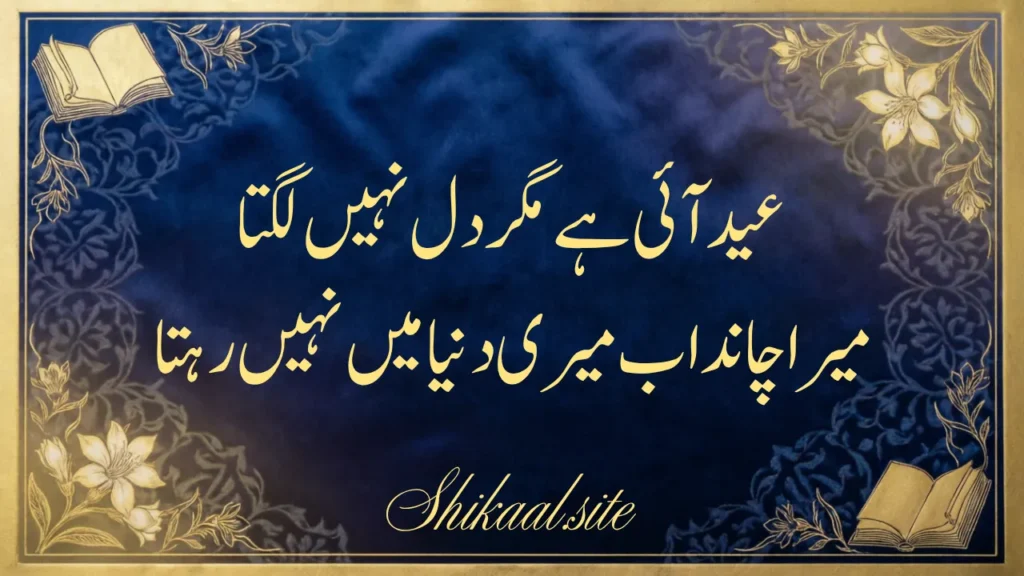
چاند نکلا مگر آنکھیں نم ہیں آج
عید آئی ہے مگر دل بے چین ہے آج
تیرا نام لے کے سانس رکتی ہے
ہر خوشی مجھ سے چھوٹ گئی ہے آج
لوگ کہتے ہیں عید منائو دل کھول کر
مگر دل تو ٹوٹا ہے، اب کیسے منائوں
تیری یادوں کے سوا کچھ نہیں بچا
اس خاموشی میں بھی تیرا ہی نام گونجے
پہلی عید تیری تھی، آج کی عید میری
فرق صرف اتنا ہے، پہلے میں جیتا تھا
اب ہر سانس میں تیرا فراق ہے
عید مبارکہ کہنے کو جی چاہتا نہیں
ہاتھوں میں مہندی نہیں، دل میں زخم ہیں
عید کی صبح بھی اب دھندلی لگتی ہے
تو خوش ہے کہیں اور، میں یہاں خاموش
یہی تقدیر تھی، شاید ہماری
عید کے دن بھی آنسو بہتے ہیں
کچھ زخم وقت کے ساتھ بھر نہیں جاتے
تیری خوشی دیکھ کر دل جلے نہیں
بس یہ سوچ کر روتا ہوں کہ ہم نہ رہے
The Pain of Watching Love Walk Away
There is a specific kind of loneliness that arrives when you realize the person who once held your future has become a stranger. You do not hate them. You simply mourn the version of yourself that believed in forever. These verses speak to that quiet unraveling, the way promises dissolve, and the heavy truth that some goodbyes happen without closure.
تو نے کہا تھا ہم ساتھ رہیں گے
عید بھی، غم بھی، ہر حال میں
اب وہی عید آئی ہے تنہائی لیے
اور تو کہیں اور کسی اور کا ہے
میرے حصے کی عید تیری ہو گئی
میرا نام تیری دعاؤں سے نکل گیا
میں نے سکھ لیا ہے اکیلے جینا
مگر یہ عید اب بھی تیرا انتظار کرتی ہے
کپڑے نئے، مگر دل پرانا ہے
ہر چیز بدل گئی، بس یادیں وہی ہیں
عید کی بھیڑ میں بھی میں تنہا ہوں
تیرے بغیر ہر خوشی ادھوری لگتی ہے
رب سے مانگا تھا تیرا ساتھ
عید کے دن بھی، سال کے ہر لمحے
مگر تقدیر نے کچھ اور لکھا تھا
اب دعاؤں میں بس تیری عافیت مانگتا ہوں
تیری مسکان میری عید تھی
اب وہ مسکان کسی اور کے نام ہے
میں شکایت نہیں کرتا رب سے
بس یہ دل پوچھتا ہے، اتنا درد کیوں
When the Takbirs Echo But the Heart Is Empty
The spiritual beauty of eid is undeniable. Yet for a broken heart, the calls to prayer and communal gatherings can feel like distant radio signals. You hear them, but they do not reach the part of you that is bleeding. These lines honor that dissonance, the way faith remains intact while human connection shatters, and the courage it takes to sit with grief on a day meant for joy.
مسجد سے تکبیر کی آواز آتی ہے
مگر میرے کمرے میں خاموشی ہے
دل کہتا ہے اٹھو، نماز پڑھو
مگر آنکھیں کہتی ہیں، اب بس نیند ہے
عید الفطر کی رحمتیں بہت ہیں
مگر میرے حصے کا سکون کہاں ہے
رب کرے ہر مومن خوش ہو
مگر یہ دل ابھی تک تجھے ڈھونڈتا ہے
ہر عید نئی امید دلاتی ہے
مگر میری امیدیں تیرے ساتھ چلی گئیں
میں جانتا ہوں رب بڑا مہربان ہے
مگر آج کا دن میرے لیے بھاری ہے
لوگ مل رہے ہیں، گلے لگ رہے ہیں
میں کھڑا ہوں دور، مسکرا رہا ہوں
اندر سے ٹوٹا ہوا، باہر سے مضبوط
عید ہے، مگر میرے لیے بس ایک دن ہے
صدقہ فطر دے دیا، نماز بھی پڑھ لی
مگر دل کا بوجھ ہلکا نہیں ہوا
شاید کچھ زخم صرف وقت سے نہیں
بس دعاؤں اور صبر سے بھرتے ہیں
The Quiet Dignity of Not Celebrating
Society expects everyone to perform joy. When you cannot, you are labeled as gloomy or ungrateful. But true emotional maturity lies in honoring your own pace of healing. These verses are for the boy who chooses silence over forced smiles, who steps back from gatherings not out of arrogance but out of self preservation, who knows that sometimes the bravest thing is to admit you are not okay.
میں عید نہیں مناؤں گا آج
نہ کوئی شکایت، نہ کوئی الزام
بس اتنا جانتا ہوں کہ دل تھکا ہے
اور تھکے دل کو زبردستی خوشی نہیں چاہیے
کچھ لوگ عید پر ہنستے ہیں
کچھ لوگ عید پر روتے ہیں
میں ان میں سے ہوں جو خاموشی چنتے ہیں
کیونکہ آواز دینے کو کوئی نہیں رہا
میرے گھر میں مٹھائی نہیں آئی
میرے ہونٹوں پر مسکراہٹ نہیں آئی
میں نے سب کو عید مبارکہ کہہ دیا
مگر اپنے دل سے معافی مانگ لی
عید کی تیاریاں دیکھ کر دل گھبرایا
میں نے دروازہ بند کر لیا
نہ نفرت ہے، نہ غصہ، نہ شکایت
بس ایک خاموش استعفیٰ ہے
ہر سال عید آتی ہے، ہر سال جاتی ہے
میرا زخم ابھی تازہ ہے
میں وقت دوں گا خود کو، بہت جلد نہیں
مگر ایک دن ضرور مسکراؤں گا
When Love Becomes a Lesson in Letting Go
Heartbreak on eid teaches a cruel but necessary truth. Not every story gets a happy ending. Some are meant to be carried, not resolved. These final verses reflect the slow acceptance that begins when you stop waiting for what will not return, when you start praying for peace instead of reunion, and when you realize that surviving eid alone does not make you weak. It makes you real.
تیرے بغیر عید گزر جائے گی
میں جانتا ہوں، میں مان لیتا ہوں
مگر یہ مان لینا آسان نہیں تھا
اب سانس لینا بھی سبق ہے
میں نے تمہیں خوش دیکھ کر سکون پایا
شاید یہی میری عید ہے
تمہاری مسکان، تمہاری کامیابی
میرے لیے کافی ہے، اگرچہ میں نہیں ہوں
کبھی تم بھی میری عید تھے
اب تم بس ایک یاد ہو
مگر یادیں بھی محبت ہوتی ہیں
وہ بھی دل کو جینے کا سہارا دیتی ہیں
عید کے بعد بھی زندگی چلتی ہے
دھوپ آتی ہے، بارش بھی آتی ہے
میں ٹوٹ کر بھی سہارا بنوں گا
کیونکہ مرد ہوں، اور مرد رو کر بھی کھڑا رہتا ہے
آخری بار کہتا ہوں عید مبارکہ
نہ امید رکھتے ہوئے، نہ واپسی کی دعا
بس یہ کہنے کے لیے کہ میں تمہیں
خوش رہتے دیکھ کر بھی جی سکتا ہوں
Understanding Why Eid Sad Poetry in Urdu Matters
Poetry does not cure heartbreak. It does not rewrite the past or bring back what was lost. But it does something equally important. It gives pain a voice. When a boy reads these lines and recognizes his own silence in them, he stops feeling broken in isolation. He realizes that grief is not a flaw. It is proof that he loved honestly. The cultural expectation around eid demands outward celebration, which often leaves inward sorrow unacknowledged. That is why eid sad poetry in urdu holds such quiet power. It validates the experience of those who sit through the day carrying invisible weights. It reminds readers that spirituality and sorrow can coexist, that missing someone does not mean you have lost faith, and that healing sometimes begins with simply admitting the hurt. These verses are not meant to trap anyone in nostalgia. They are stepping stones. Each line is a small act of release, a way to transfer the heavy thoughts onto paper instead of letting them rot inside. When you copy a couplet, share it, or keep it in your notes, you are not glorifying sadness. You are honoring your own humanity.
How to Navigate an Eid When Your Heart Is Heavy
If you are reading this while feeling exactly what these poems describe, please know that your feelings are legitimate. You do not have to perform joy to prove your worth. You do not owe anyone a smile on a day that reminds you of loss. Protect your peace. Step away from overwhelming gatherings if they drain you. Pray in your own rhythm. Speak to a trusted friend or write your thoughts down instead of burying them. Healing is not linear, and some eid mornings will always carry a shadow. That does not mean you will never feel light again. It simply means your heart is still learning how to beat without the person who once set its pace. Give yourself grace. Let the poetry be a companion, not a cage. And when you are ready, let the same words that once reflected your pain become a testament to your survival.
Final Thoughts: Your Silence Is Still Heard
Eid will pass. The decorations will come down, the sweets will be finished, and the calendar will turn to another month. But the verses you carry today will remain as proof that you felt deeply, loved genuinely, and chose to face your sorrow with honesty instead of denial. That takes courage. Keep these lines close when the night feels long. Share them when you need to speak without speaking. And remember that every heart that has ever broken on eid has eventually found its way back to quiet mornings, gentle breaths, and a different kind of peace. You are not alone in your ache. You are simply human. And being human means sometimes crying on a day the world expects you to smile. That is okay. It always will be.
Frequently Asked Questions
Why do some people feel sad on eid even when others are celebrating
Eid amplifies emotions because it is a milestone day. If you are grieving a breakup, loss, or loneliness, the contrast between communal joy and personal pain becomes sharper. This does not mean you are ungrateful. It means your heart is processing something real, and poetry offers a safe outlet for that processing.
Can sharing sad eid poetry help in healing
Yes. Expressive writing and reading emotionally accurate verses reduce the psychological burden of suppressed feelings. When you see your experience reflected in words, the isolation decreases. Sharing is optional, but writing or copying these lines into a personal journal can create measurable emotional relief over time.
Is it wrong to avoid eid celebrations when heartbroken
No. Protecting your mental energy is a form of self care. You can still fulfill spiritual obligations while stepping back from social gatherings that feel overwhelming. Healing requires boundaries, and taking space does not make you less faithful or less worthy of joy in the future.
How do I copy the urdu shayari on my phone
Tap the copy button beneath any poem. The text will instantly save to your clipboard. Open your notes, messaging app, or social media draft and paste it. The formatting is kept clean so it displays correctly on all devices without extra symbols or broken lines.
Will these poems help me feel normal again
They will not erase the pain, but they will help you carry it with more clarity. Poetry does not fix broken hearts overnight. It walks beside them until the weight becomes manageable. Keep returning to your own pace, honor your grief, and trust that time, patience, and self compassion will eventually soften the edges.